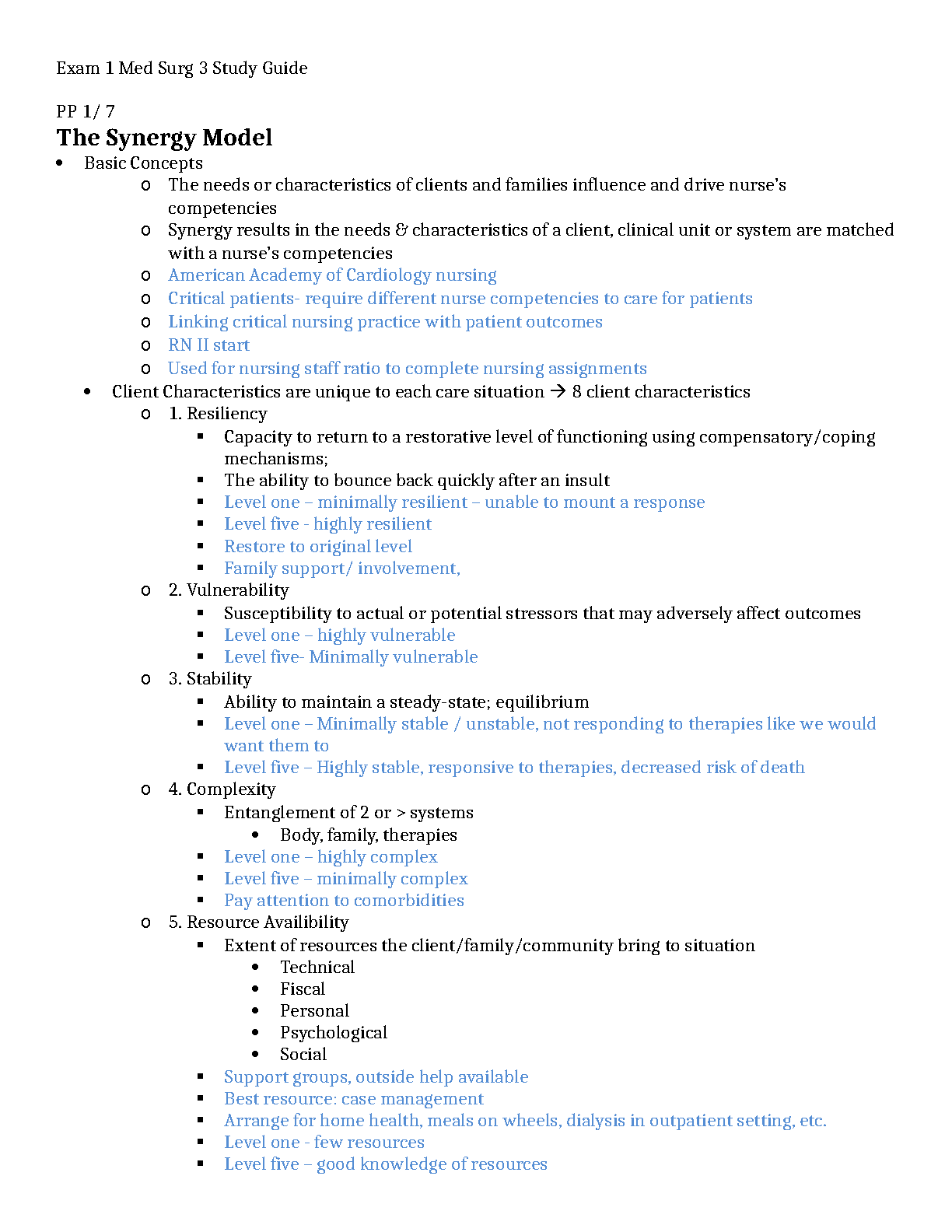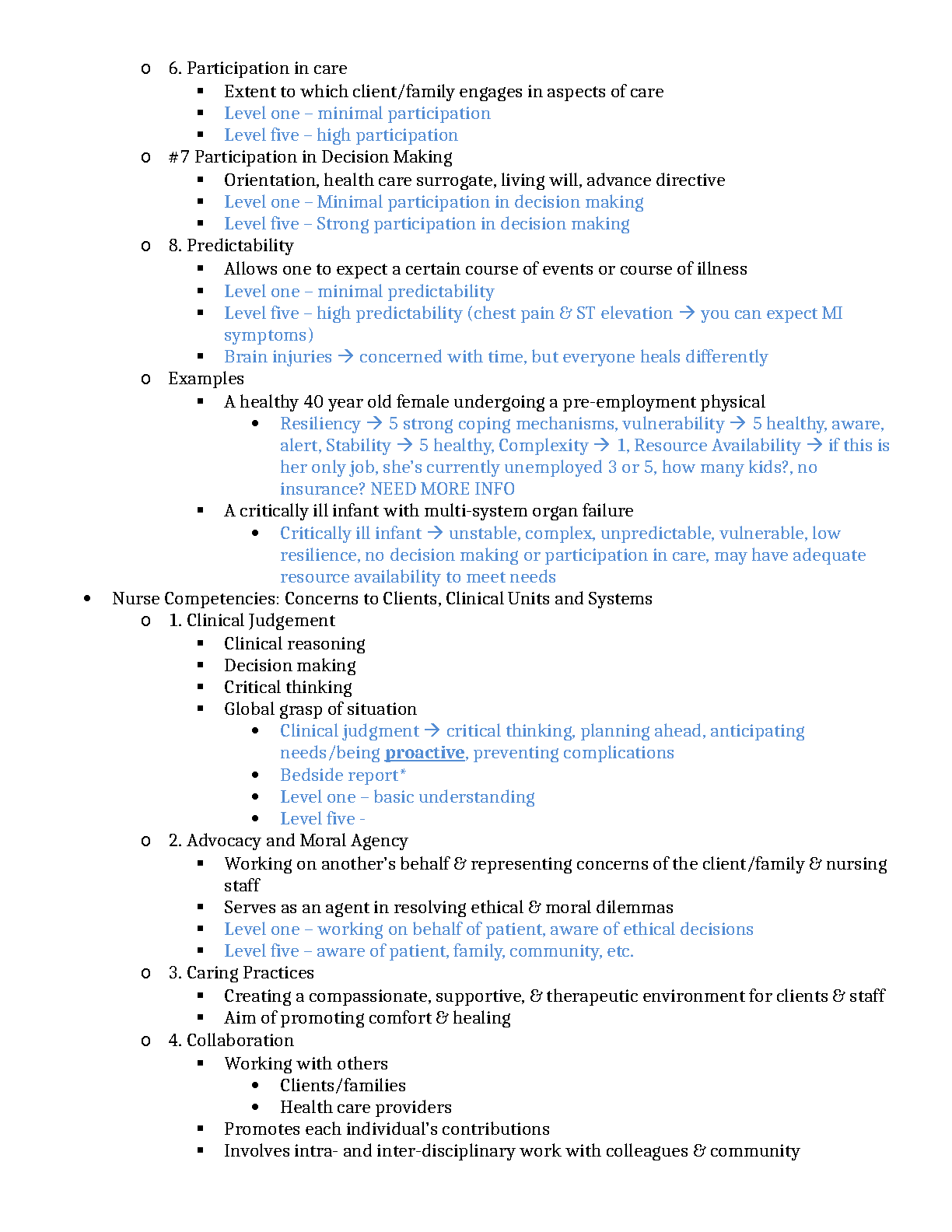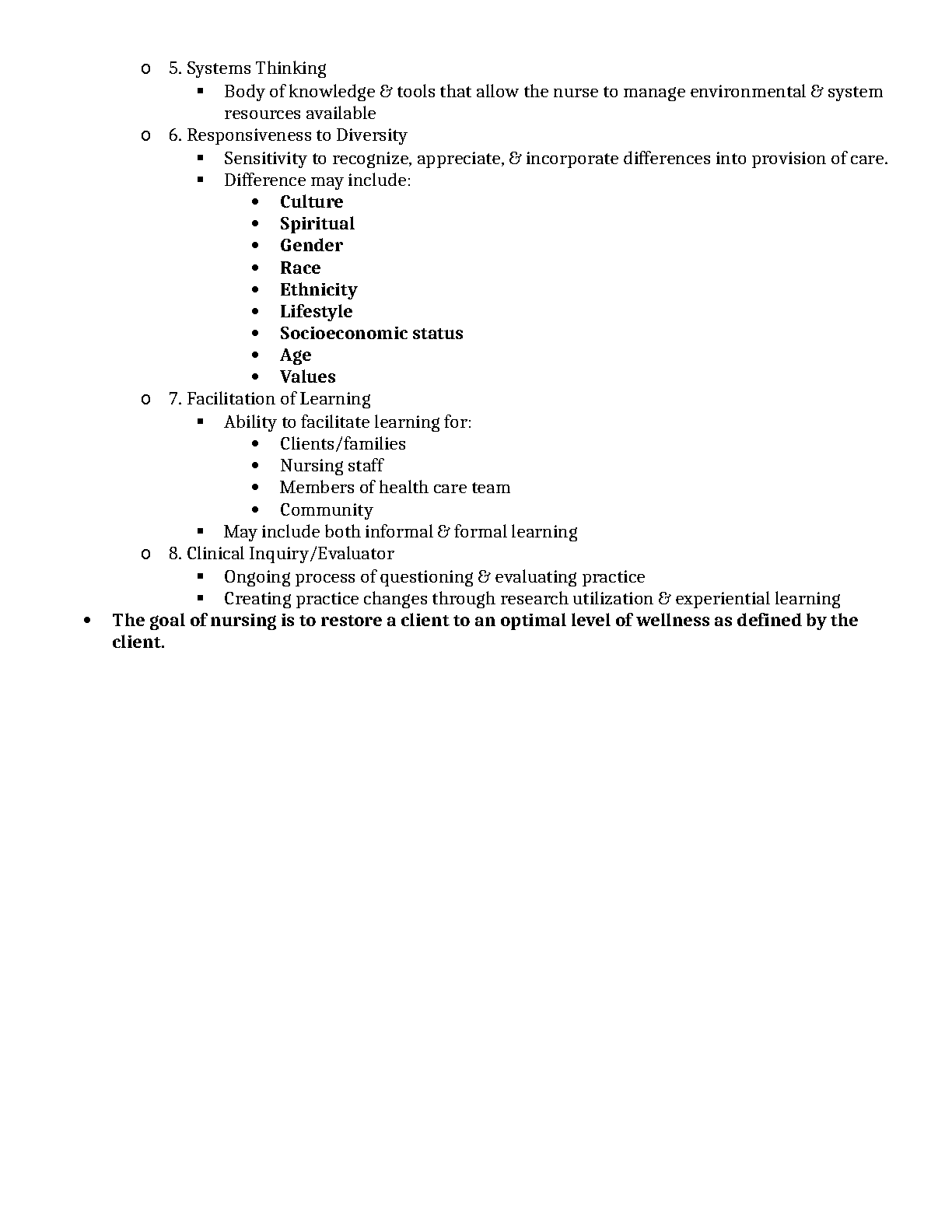






The Synergy Model: A Guide to Nursing Practice for the 2024/2025 Academic Year by Marilyn E. M. Smith, Linda J. Duell, Anne M. H. Grady, Diane S. Parker, Janet L. Parker
This resource is designed to help nursing students pass their exams on the first attempt. It covers the Synergy Model in detail, providing a comprehensive understanding of its application to real-world nursing practice.
Show more
Preview 3 of 57 pages
{{ realtimeViews.product }}Users are viewing this page.
2Users are checking out.
Similar titles
Quantization of Energy Lab Report Title: Quantization of Energy Objective(s): Determine the composition of a new star. Solution Manual For Wind Energy Renewable Energy and the Environment 3rd Edition By Nelson , Starcher NGN 2023 ATI FUNDAMENTALS PROCTORED EXAM GRADED A 1. A nurse is teaching about the energy needed Student Exploration: Dehydration Synthesis Vocabulary: carbohydrate, chemical formula, dehydration synthesis, disaccharide, glucose, hydrolysis, monosaccharide, polysaccharide, valence Prior Knowledge Questions (Do these BEFORE using the Gizmo.) 1. If you exercise on a hot day, you need to worry about dehydration. In this context, what do you think dehydration means? Dehydration is the loss or removal of water from your body. 2. Astronauts and backpackers often bring dehydrated food. What do you think dehydrated food is? Dehydrated food is food that can be preserved by extracting the moisture which will allow for the growth of microorganisms Gizmo Warm-up What do rice, potatoes, and sugar have in common? They are all foods rich in carbohydrates. Carbohydrates are an important energy source for your body. The basic building block of most carbohydrate compounds is the molecule glucose. Using the Dehydration Synthesis Gizmo™, you will learn about the structure of a glucose molecule and how glucose molecules can be joined together to make larger carbohydrate molecules. To begin, select the CREATE GLUCOSE tab. 1. Look at the chemical formula for glucose. How many carbon (C), hydrogen (H), and oxygen (O) atoms are found in a molecule of glucose? C:____6___ H:__12_____ O:___6____ 2. Turn on Show chemical structure. Each black sphere represents a carbon, hydrogen, or oxygen atom. The lines connecting the spheres represent chemical bonds. A. How many black spheres are in the diagram? ____24 [eBook][PDF] Wind Energy Renewable Energy and the Environment, 3rd Edition By Vaughn Nelson, Kenneth Starcher Bomb Calorimetry: Determination of the Resonance Energy of Benzene BIO 182 Corridors Case Study- Do Corridors Have Value in Conservation? Why is it more difficult for top carnivores to obtain sufficient energy resources than it is for animals lower on the food chain? E book Energy and the Environment 4th Edition by Robert A. Ristinen, Jack J. Kraushaar, Jeffrey T. Brack Environment: The Science Behind The Stories Chapters 3 and 4 Notes 2023Competition - -When multiple organisms seek the same limited resource -Resource partitioning - -Species partition or divide the resource they use in common by specializing in different ways. -Predation - -Process by which individuals of one species, a predator, hunt, capture, kill, and consume individuals of another species. -Parasitism - -Relationship in which one organism depends on another for nourishment or some other benefit while simultaneously doing the host harm. Does not result in the host's immediate death. -Mutualist - -Type of symbiosis that is positive. An association between organisms of two different species in which each member benefits. -Herbivory - -When an animal feeds on plant tissue. -Symbiosis - -Physically close association between interacting species. Mutualistic or parasitic interactions. -Pollination - -An interaction vital to agriculture and our food supply. Involves free living organisms that may only encounter each other only once. -Community - -Assemblage of organisms living in the same area at the same time. -Trophic Level - -Rank in feeding hierarchy -Producers - -1st Trophic level Autotrophs Cyanobacteria, algae, phytoplankon, and grasses Capture solar energy and use photosynthesis to produce sugar -Consumers - -2nd trophic level Zooplankton, grazing animals like deer or cattle, insects Consume producers -Secondary Consumers - -3rd trophic level fish, rodents, wolves prey on primary consumers -Tertiary Consumers - -4th trophic level The Gibbs Energy and Chemical Equilibrium
$16.00
Verified solution by professor
Money Back Guarantee 24/7
Instant Download on Payment
Orders
0
Products
0
Online users
{{ realtimeViews.website }}
Categories
0
Affiliate earnings
0
Hackedexams
HackedExams is the website to download all resources for students who want to pass their exams on their first attempt. Our website offers all exam materials, including practice questions with answers, test banks, study guides, notes, summaries, and more for nursing, computer science, biology, psychology, law, and others. With resources from popular exam bodies like ATI, AQA, OCR, Edexcel, Comptia, Azure, and more, you'll easily find everything you need to get certified. Avoid resitting exams; trust in HackedExams.com to give you the resources to pass on your first attempt. Get access to exams from 2019 to 2023 and start your path to success today. "Avoid resits, get certified within days, and pass your exams on your first attempt."
{{ recentPurchase.name.shorten(30) }}
{{ __('Just purchased') }} "{{ recentPurchase.item_name.shorten(30) }}"
{{ recentPurchase.price }}
{{ userMessage }}